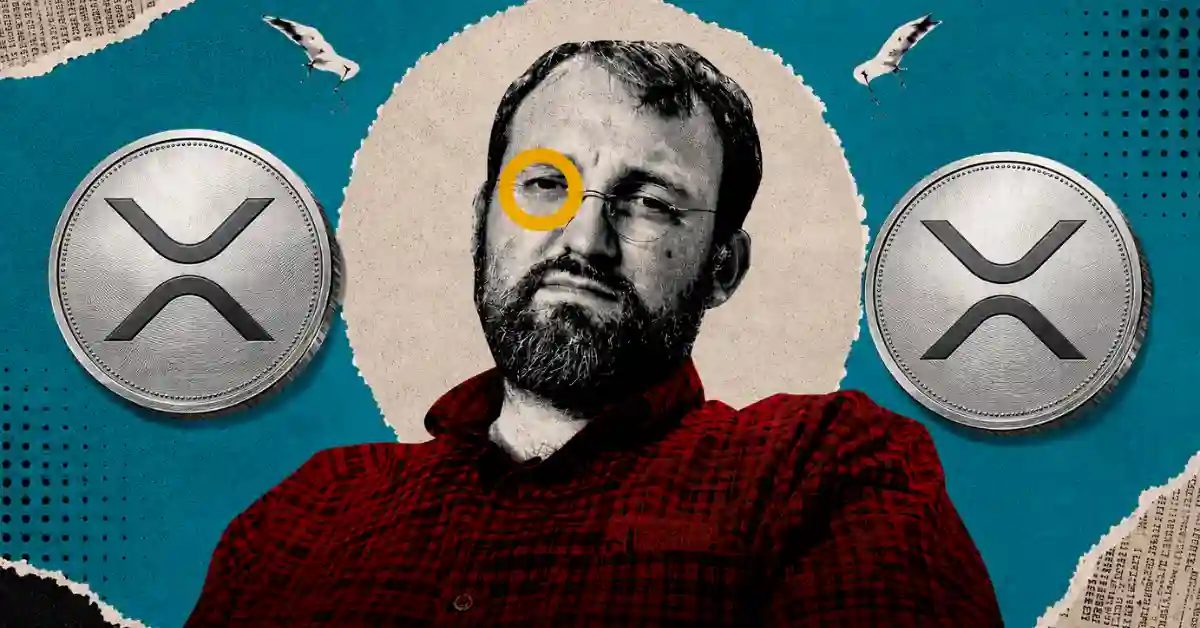
Cardano founder Charles Hoskinson said the enthusiasm surrounding XRP stems from a structural dynamic he calls Web 2.5, where a centralised company continuously builds real-world value around its native blockchain, creating a self-reinforcing cycle that retail and institutional markets reward.
Speaking in a wide-ranging discussion, Hoskinson described the pattern plainly. Ripple acquires a prime broker, closes a partnership, secures a licence, and each move adds to the value proposition of the XRP Ledger. The company and the token are linked, and the market prices in every step forward.
“Brad and the other gang, they just bought a prime broker and they just did this,” Hoskinson said. “Well, that’s a centralised company, right? But they know that that company’s going to use the XRP Ledger and so they’re going to kind of create this virtuous cycle here. The efforts of one actor is kind of driving the value proposition of the thing.”

A Model He Once Resisted
Hoskinson placed XRP alongside Tether, Circle, BNB, and Canton as examples of what he calls Web 2.5, hybrid structures that combine regulated corporate entities with blockchain infrastructure underneath. He acknowledged he spent years pushing back against this model before concluding the market had settled the argument.
“There’s nothing wrong with it. I’ve been fighting it. I mean, I’ve thrown in that towel a long time ago,” he said. “If you look at CoinMarketCap, XRP, BNB, Circle, Tether, look at where they sit. That’s where all the growth is right now.”
The Web 2.5 category, in his framing, functions like a club. A central entity builds the infrastructure, attracts institutional participation, and drives network effects. Users and capital follow.
Where the Growth Goes Next
Hoskinson said the Web 2.5 boom will not stay contained to those platforms. As these hybrid networks bring billions of users into crypto, he expects activity to migrate into true Web 3 markets if cross-chain bridging infrastructure develops properly. Projects focused on interoperability and privacy, he argued, stand to capture that overflow.
For XRP specifically, the implication is that its position at the front of the institutional adoption wave, backed by Ripple’s regulatory wins and acquisition strategy, gives it structural advantages that pure decentralised protocols currently lack.
Loading profile preview
Loading profile preview
Was this writing helpful?
Story Ends Here
Trust with CoinPedia:
Investment Disclaimer:
All opinions and insights shared represent the author’s own views on current market conditions. Please do your own research before making investment decisions. Neither the writer nor the publication assumes responsibility for your financial choices.
Sponsored and Advertisements:
Sponsored content and affiliate links may appear on our site. Advertisements are marked clearly, and our editorial content remains entirely independent from our ad partners.
Read the Next News